

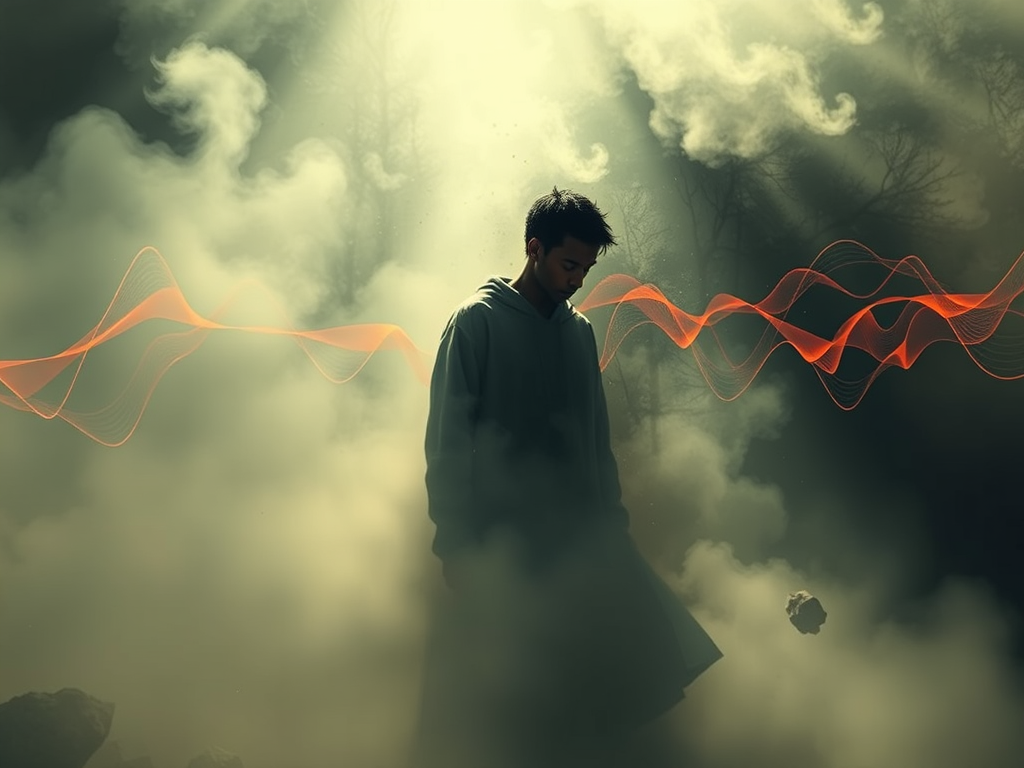
What happens to the soul when we view people as utilities rather than cathedrals? A cinematic meditation on the primitive drive to possess—and the ‘Free-Won’t’ required to remain human.
This original video is a media presentation based on a fuller article found:
https://journeeman.com/2026/03/10/the-answer-to-jobs-silence-when-god-weeps-with-us/
This concerns suffering, the silence that Job found when facing his own terrors and God’s response. Here, in the story of Lazarus, we have something significant – God choosing to assume our pain in Jesus.
We all believe we are honest people. We say we value truth. We claim we are willing to be seen as we truly are. But what if the deepest deceptions are not the lies we tell others? Instead, they might be the truths we refuse to admit to ourselves. Fyodor Dostoevsky’s Notes from Underground provides unsettling psychological insight. This spoken-word reflection is inspired by it. It explores the hidden layers of self-concealment and the quiet fear of being fully known.
Ever read Genesis 1 and feel like it’s more about science than soul?
I did—until prison stripped away everything, and the text spoke afresh.
What if ‘In the beginning’ isn’t about God making stuff from absolute nothing… but about Him brooding over chaos (tohu wabohu), breathing order, function, and beauty into formless darkness?
A God who transforms disorder into relational harmony, echoing through resurrection and new creation.
From my cell, this became a promise: no matter the chaos in your life, God’s Spirit still hovers, ready to reorder and renew. Full article:
https://journeeman.com/2026/02/25/genesis-1-ordering-purpose-and-narrative-insight/
Is it equality of outcome? Is it power? Is it law?
Or is it something deeper — rooted in how we understand the value of a human being? In this spoken-word reflection, I explore justice through Scripture, philosophy, and character. From “an eye for an eye” to Micah 6:8, from intrinsic human worth to personal accountability, this is a call to recover justice as something that begins in the individual heart.
Justice is not preference.
It is not crowd power.
It is not performance.
It is to do justice, love kindness, and walk humbly with God.
Eden was not a wilderness. It was a garden.
And gardens do not emerge by accident.
They are enclosed. Ordered. Tended.
The natural world does not care whether we flourish. It persists according to its own rhythms—competition, decay, renewal, repetition. There is no malice in it. No moral hostility. Only indifference.
In prison, razor wire stitches the sky shut. Concrete. Steel. Isolation.
But no one tells you about the wings. This spoken word piece draws from real experiences inside Spring Hill and Waikeria prisons in New Zealand — cicadas stealing sleep, mice as unlikely company, sparrows flying through food slots, cats mediating between guards and inmates, and a deformed magpie finding trust in a hardened hand.Animals didn’t remove the bars… but they softened what the bars wrapped around. A quiet reminder that humanity can still slip through the cracks.
Originally written in November 1995 and gently revised in February 2026, this poem is a quiet, reverent exploration of the feminine mystery—rooted in the biblical image of the “tender shoot from rib’s blossom.” Through a litany of “She,” it honors tenderness and passion, paradox and power, craft and comfort… until it opens into something greater: She, He, We… complete and one. Communion.
Have you ever felt someone you loved slowly disappear… not just from the world, but from your own mind?
That’s the second death. And it’s why I had to write this poem.
Stay with me—because the words we leave behind might just make the shadows feel solid again.
Leave a Reply