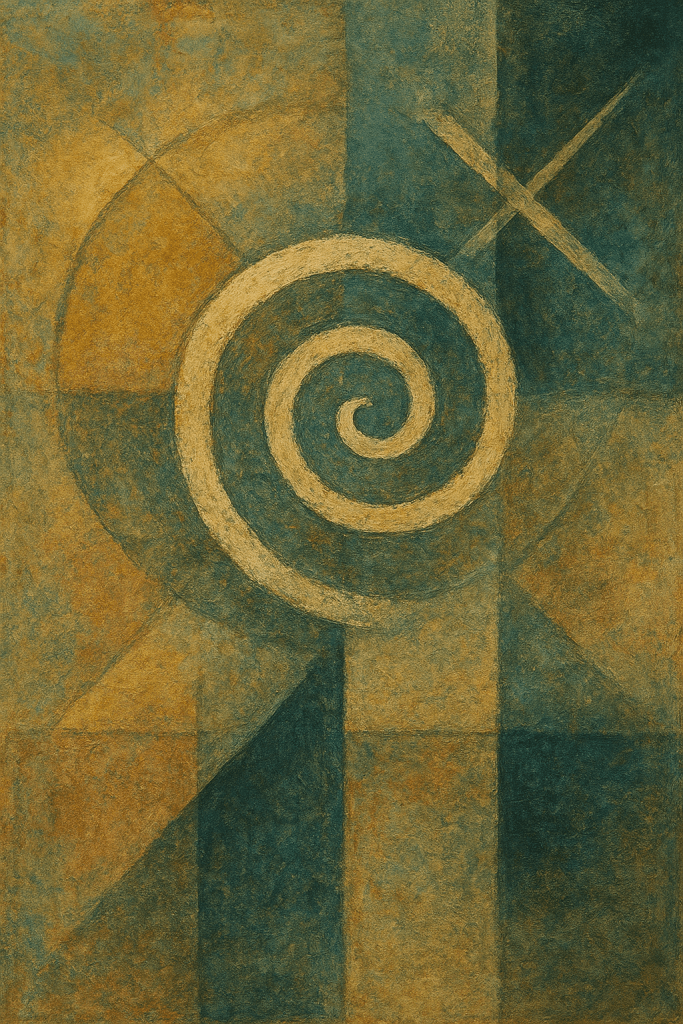

“What are you seeking to understand?”
This seemingly simple question, posed on Quora, opens up a vast landscape of philosophical exploration. It invites us to consider not only what we seek to know, but why we seek it, and how our pursuit of understanding shapes our experience of the world.
But what makes this question so philosophically interesting and worthy of exploration?
Let’s start with the analytical definitions of the words within the question:
“What are you seeking to understand?” – Raw Detail Breakdown
- What: The question presupposes that there is something to be understood.
- Are: The question assumes that the person being asked is currently in the process of seeking something.
- You: The question is directed at a specific individual, making it a personal and subjective inquiry.
- Seeking: The question implies an active attempt to find or discover something.
- To Understand: The question suggests a desire for comprehension, for grasping the meaning or significance of something.
One of the most interesting aspects of this question is how it would be received by the person being asked. For someone in a technical field, it might be interpreted as a straightforward request for information or a problem-solving challenge. For a creative individual, it might spark a search for aesthetic inspiration or a deeper understanding of human emotions. And for a child, it might be seen as an invitation to explore the world with curiosity and wonder, turning the quest for understanding into a playful game.
Of course, many of the questions we face in life require only a simple “yes” or “no,” or a brief, practical answer. But it is the meta-narrative, metaphysical, and transcendent questions—the questions that tap into our very being as humans—that truly challenge us to think deeply and explore the boundaries of our understanding.
But what if the true value of this question lies not in finding a definitive answer, but in embracing the openness and possibility it creates? What if we could approach this, and all questions, with such curiosity and wonder that we transcend the limitations of fixed perspectives? What if, instead of seeking a single, correct answer, we embraced the excitement and vitality of exploring the question in its fullest extent, recognising that the journey of inquiry is often more rewarding than the destination?
Indeed, the journey is where we truly grow. If answers were simply given to us, we would become nothing more than binary switches, passively receiving information. But when we actively explore, investigate, and delve into the complexities of a question, we forge emotional connections, expand our intellectual horizons, and tap into a deeper sense of meaning and purpose. We become invested in the who—in the process of discovery and the growth it fosters—not merely the what—the acquisition of a static answer.
Thesis:
The world is a vast and wondrous place, ripe for exploration. As humans, we possess the intellectual and creative capacity to engage with it meaningfully. We can appreciate beauty, discern nuance, and express our understanding through language—especially the rich tapestry of modern languages. We are, therefore, invited into a dynamic and profound engagement with life’s questions.
Antithesis:
Despite our potential, we rarely perceive the world as it truly is. Human nature is prone to reductionism, often viewing things through the lens of personal gain. While we possess the capacity for profound understanding, we are also constrained by limitations, biases, echo chambers, and fear. Indeed, we may even be so afraid of certain questions that we shut them down, overwhelmed by horror and terror rather than inspired by creativity.
Synthesis:
The resolution lies in embracing the journey of inquiry itself. Questions are not merely obstacles to be overcome, but rather keys to unlock new possibilities and perspectives. By approaching questions with curiosity, openness, and a willingness to explore, we can transcend our limitations and discover unexpected treasures. The true value lies not in finding definitive answers, but in the process of engaging with the question—a process that enriches our intellect, stirs our emotions, awakens our aesthetic sensibilities, and fosters meaningful connections with others.
Moreover, we must approach the pursuit of understanding with humility, recognising that our knowledge is always incomplete and that there are always deeper layers to explore. Often, in the most profound questions, we only scratch the surface, uncovering a single layer of a multifaceted reality. Instead of seeking definitive conclusions, we should view each answer as a stepping stone, a position from which to move towards even greater understanding.
Instead of asking “What are you seeking to understand?”, perhaps we should ask: “Are you willing to embark on a lifelong adventure to discover the full potential of your being, to engage with the world in all its complexity, and to connect with other beings and phenomena in meaningful ways?”
One of the first steps in embracing this adventure is a willingness to ask serious questions—to delve into the world’s complexities and challenge our assumptions. This requires a commitment to lifelong learning: the pursuit of understanding is continuous, not a destination.
For some, the interconnectedness of all things may seem overwhelming, a chaotic web. But within this complexity lies richness: colour, nuance, melody, and harmony. Discomfort and discord are essential elements of the journey, contributing to its depth and beauty.
Approach this journey with sincerity, authenticity, and self-understanding. Each individual’s brain and self are uniquely constructed, shaped by external forces and internal creativity. Embrace your unique perspective and engage with the world authentically to unlock new possibilities for understanding and growth.
So, what am I seeking to understand? Simply this: I seek to understand the very act of seeking understanding—to explore the lifelong journey into the possibilities and curiosities of what might be. I want to reflect the question back on itself, to delve into the heart of inquiry and embrace the endless quest for knowledge and wisdom.
I am not an artist in the traditional sense; I cannot create visual masterpieces. But I find artistry within intellect, philosophy, theology, and investigation. Words, ideas, and concepts are my brushstrokes, the colours and essence of my artistry.
Sometimes, this artistry is brilliant and exciting. Other times, it is dark and difficult, leaving me feeling empty. But neither the highs nor the lows should be the focus. They are all part of the journey. There will be joy and discovery, and there will be doubt and disillusionment.
Ultimately, the question is not “What are you seeking to understand?” but “Are you willing to understand whatever comes your way? Are you willing to see the world as it is and engage with it in all its complexity, beauty, and challenges?”



Leave a Reply