

A Personal Reflection
Introduction: Outsider Questions, Divine Surprise
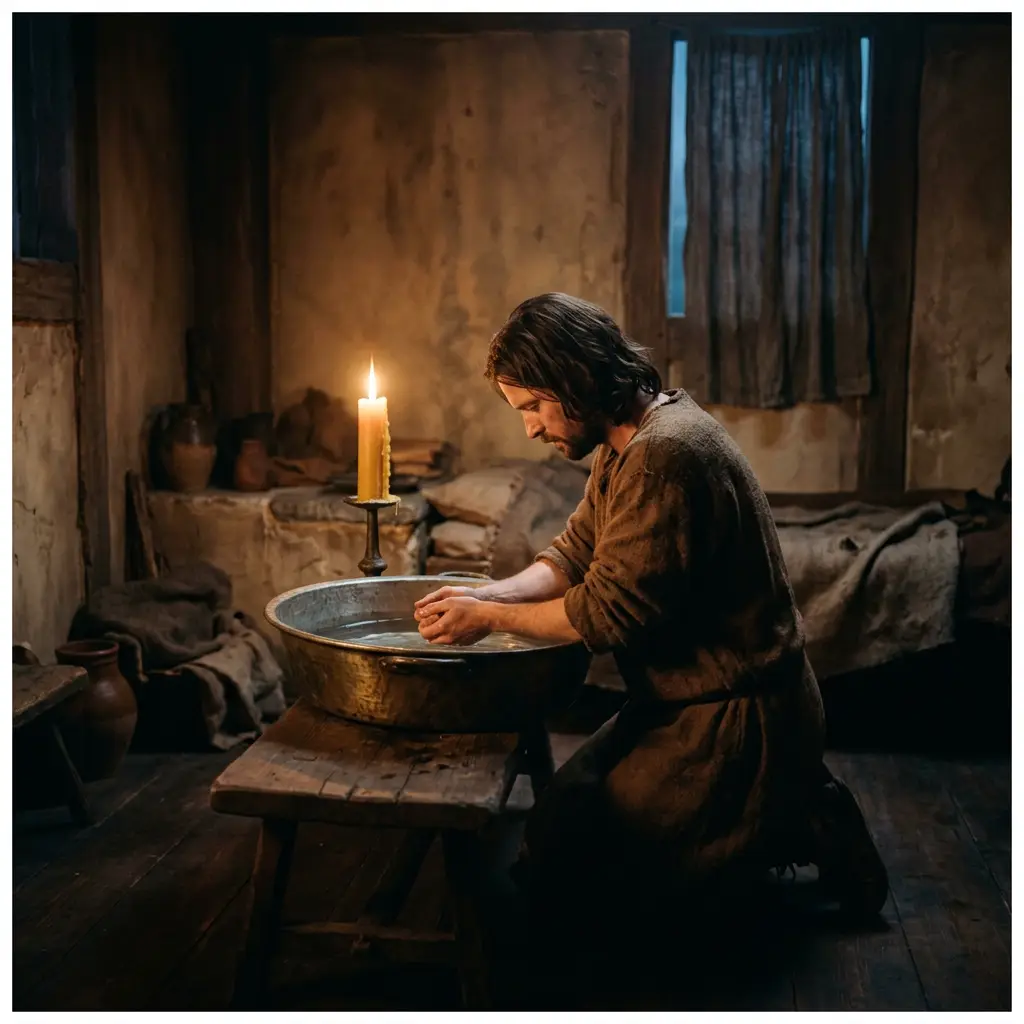
There are moments that shift how you see everything. Mine did not come in grand theology or liturgy, but in the quiet scene of a meal where the Lord of all things knelt to wash feet.
Growing up autistic in the 1970s and 80s—before such differences were understood—I learned early what it is to be an outsider. Peers were unkind; Christian circles often demanded you fit a mold, think approved thoughts, perform faith correctly. Charity was thin: “We tolerate you, but only if you blend in.” A teenage experience drove this home: a friend insisted speaking in tongues marked true faith, pressured me, then judged me false when it did not happen. I lost my community, left on the edge.
I have wandered traditions—Salvation Army, Pentecostal, Brethren, Baptist and now in a home group fellowship —always questioning, seeing angles others missed, made uncomfortable by rigid dogma. I learned a hard truth: we dislike outsiders. We prefer tidy boundaries over awkward differences. Belief often becomes conformity: belong only if you become like us.

This personal wound is where my existential question began: Can I belong without ceasing to be me? Can I be authentic and accepted without performing someone I am not?
It is in John 13 that I find the answer—not by erasing my questions, but by meeting a God who overturns every expectation of greatness, status, and what it means to be real.
Context: Timing, Truth, Sacred Intimacy
John places this supper before Passover; the synoptic Gospels frame it as the Passover meal itself. Some scholars suggest differing Jewish calendars explain this; I see it as theological purpose: John shows us Jesus is the ultimate Passover Lamb. His death coincides with sacrifice, fulfilling redemption itself.
This happens in an upper room—private, intimate, small. Salvation is not only public ritual; it is where hearts gather, where vulnerability is possible.
It is in such sacred spaces—where we touch meaning, purpose, faith, and each other—that crisis strikes. Betrayal, fear, loss, uncertainty strip away our confidence. Yet these are the moments that define us: crisis reveals who we choose to be. John does not repeat the bread and cup; he gives us the action that defines the new covenant: The Lord becomes the servant.
The People: Real, Fragile, Choosing Humans

Around this table are no perfect saints—only real people. We exist always on the edge of possibility and failure. Progress is never automatic; it is deliberate choice. Passivity turns us into victims of circumstance; choice is where our humanity lives.
These disciples believe in the cause, believe their hearts are true—yet soon they will scatter, deny, betray. We see the real person: anxious, finite, uncertain, flawed, becoming.
At the centre stands Jesus—knowing His origin, His destiny, knowing all things are given into His hands. His authority is not opposed to humility; authority is revealed in humility. The hands holding the cosmos are the hands that kneel.
- Judas: He shows us the terrifying weight of agency. He walks close to light, yet chooses his own way, against love. Proximity to truth does not force surrender. Freedom includes the dark possibility of choosing darkness—Jesus does not stop him, does not coerce, does not crush his will even when it turns to betrayal.
- Peter: He is my mirror. He says: “Never shall You wash me!” Not just pride—he refuses dependency. He wants to be the one who acts, the one who controls the terms of belonging. He thinks: I will prove worthy, I will be strong, then I will belong. He cannot bear to be the receiver.
The Turning Point: Receive First—Then Live
Jesus answers him simply, devastatingly:
“Unless I wash you, you have no share with me.” — John 13:8
No demand: Be good first, try harder, earn your place.
Only invitation: Let Me serve you first.
This is the reversal that changes everything. Authentic life does not begin with the self asserting itself, building its own worth. It begins with receiving.

We live tired of performing—masking, pretending, forcing certainty, hiding questions, fearing we are not enough. Jesus does not say: You are enough in yourself. He says: You do not need to make yourself enough. Receive what I give.
Authentic faith is not self‑affirmation; it is honesty: I am insufficient, I am flawed, I question, I fail—and I come just as I am, to receive grace. I choose to walk with Him not because I am perfect, but because He is my truth and my life.
Meaning is received, not manufactured. And received meaning does not make us passive—it frees us. From this place of being served, the command flows naturally: “I have given you an example, that you also should do just as I have done to you.”
Existential Reflection: Freedom, Authenticity, Love
Let me be clear: John is not a modern existentialist philosopher. He does not use their words. But he confronts the same human questions: What does it mean to exist truly? How do I escape pretense? How do I find freedom without losing myself? He answers them through the living Christ—light and darkness, truth and falsehood, life given and received.
✨ Authenticity: Not Conformity, But Truth Before God
The world demands we shape ourselves to fit, to impress, to rank higher. Jesus strips that away. Authenticity is not “being myself” in isolation—it is being who I was created to be: beloved, cleansed, called to serve.
Judas shows the emptiness of building meaning only for self. Peter shows the dead end of building identity on self‑reliant strength. Jesus shows the way: rooted in the Father, He has nothing to prove. I do not need to perform to belong; I simply receive His love.
✨ Freedom: Not Independence, But Power to Love
We imagine freedom as doing whatever I want, free from obligation. Jesus shows us true freedom: He is free from pride, free from fear, free from the need to be praised—so free He can give Himself away.
Freedom is not absence of commitment; it is capacity to love without coercion. Grace does not take away choice—it frees choice from the burden of proving worth. I can say yes or no; I can stumble; I can choose again. I am free to receive, then free to serve—not as forced duty, but a joyful gift.
✨ Meaning: Relationship Over Achievement
Existentialism asks: How do I find purpose when meaning is not handed down easily?
John answers: Meaning is found in connection—not built alone. Connected to the God who kneels for me; connected to others as I kneel for them—forgiving, restoring, lifting up. Even in failure, even in confusion, we abide in love that does not depend on our perfection.
Conclusion: The God Who Kneels—Empowering Agency, Transforming Life
This is the great paradox that holds it all together:
The One with absolute authority does not dominate. He kneels.
Jesus serves by honouring agency: He does not force love, does not override choice, even when choice leads to denial and betrayal. He does not weaken Himself in serving—He reveals who He is: Servant-King who empowers.

Following Him is not about becoming a doormat, someone passively crushed by the demands or expectations of others. That is a distortion of true service. Instead, rooted in chosen faith, freed from the need to impress, we are free to serve without controlling the outcome, free to let others choose their own path. This is not about self-erasure; it is about self-giving rooted in the strength of received grace.
This is the existential revolution:
- We seek authenticity by striving to be self‑sufficient → Jesus shows authenticity in receiving grace.
- We seek freedom by escaping dependence → Jesus shows freedom by letting love in, then giving it out.
- We seek meaning by great achievement → Jesus shows meaning as a gift received, then shared.
This is the invitation: Stop performing. Stop trying to make yourself enough. Let the God who kneels serve you. Then, freed from the burden of proving yourself, you can kneel too.
That is authentic life. That is freedom. That is love.
“Now that you know these things, you will be blessed if you do them.” — John 13:17




Leave a Reply