
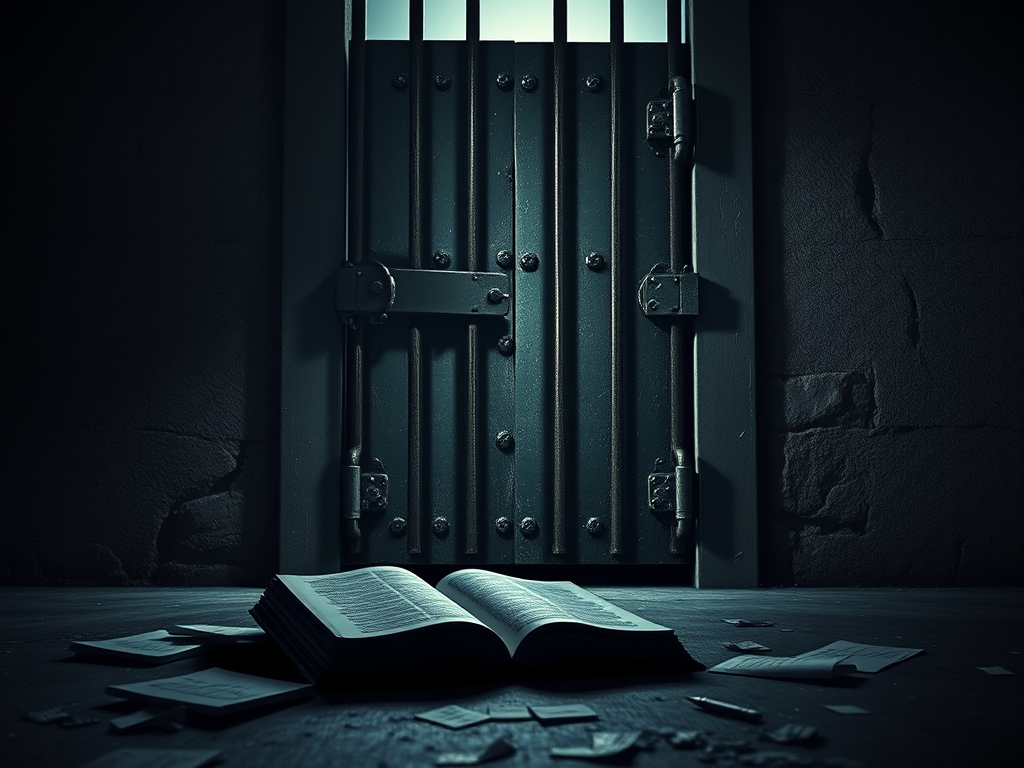
Intro to my New Book for you to preview:
Bars, Embeddedness’ Becoming.
Reflections from prison through the eyes of faith and thought.
By Malcolm Hore (B.Theo CTH)
Link to the paper back:

Index:
Chapter 1: Bolts and Being. Page 3.
Chapter 2: “Knock, knock,” “Who’s there?” Page 27.
Chapter 3: Embeddedness. Page 38.
Chapter 4: Homeliness in the World. Page 48.
Chapter 5: On Being the Everyone. Page 61.
Chapter 6: The Importance of Disillusionment. Page 71.
Chapter 7: Poems from Prison. Page 87.
Chapter 8: Written on Stone. Page 103.
Chapter 9: Calling the Neuro-Diverse Page 119.
Chapter 10: From Walls to Words:
A Journey of Self-Discovery. Page 130.
Chapter 11: To ‘will’ to be becoming. Page 142.
Chapter 12: Going Home. Page 149.
Epilogue: Taking a breath. Page 164.
Chapter 1: Bolts and Being
The First Days: Arrival and Initial Impressions
The heavy metal cell door closes behind me. The guard slips the key into the lock and turns it, moving the latch into its logical position. Its inevitable role would shape my life. The scratching sound on metal against metal grates the soul as much as it does rigid metal itself. The metal sentry, allowed once more to fall back with the other keys on the guard’s side, reminds everyone who is in control. So begins my period of incarceration.
The two guards who accompanied me to my cell, dressed in their correction blues, turn and walk away, leaving me stuck in this new and overwhelming reality. Here, behind the many bolts and bars, fences, and razor wire, I am faced with the task of discovering and remoulding myself in a foreign land within my own nation.
My clothes had been replaced with those that would distinguish inmate from the custodial staff. In this way, the system would remind me that I had been transported to this alien, constraining space with its own dress, culture, and daily rituals. There could be no doubt that the familiar would begin to slip away from me as time, and each new facility reinforced this reality with a new uniform. Yet each space conformed with the previous, each circumstance declaring, “You belong here now.” It would take time to adjust to each new look, but eventually, the grey of Waikeria would become familiar and even normal, even almost homely, throughout my prison experience.
Even though the sun’s heat made its presence felt, the wintry place I had become bound to birthed a chill within my mind that spilt into my body. It was not long before fear and anxiety had added to it a profound, relentless exhaustion, producing a sleep that by now was well needed, but poorly delivered the rest hoped for.
COVID management, significant staff shortages, and the courts rushing to catch up with significant backlogs put Spring Hill under obvious pressure. Apart from the fear some inmates had of the “unvaccinated,” the marks of frustration and exhaustion seemed etched upon the officers’ faces, and sometimes vented upon everyone around them.
The Prison Environment: Routine and Reality
On arrival, the new intakes were checked for COVID in a compound separated from everyone else. When cleared, our arrival group was then assigned to the appropriate compound according to our security classification. With the staffing and Covid issues, we were allocated one hour a day unlock within the compound. The idea was to give us fresh air and some sun. It was an illusive facade. Reality was spinning its web around me, latching upon my vista and my mind, draining me of motivation, and leaving me with a further thin line of frail hope.
Nighttime, at least early on in my incarceration, burying my face into the pillow and weeping was not unusual. It was the nights, when the darkness was most intense, I felt most alone. It was also then I felt more secure, here in the loudest quietness that reminded me of the wrongs I had encountered by the justice system. At the same time, it gave me a sense of being hidden from those who could gaze at me with their contempt and judgment. What many inmates considered the hardest time in their incarceration became my dichotomy.
While in Spring Hill, I had experienced three various cells and two compounds, once double bunked, and the rest categorised as CONTD (not to be double bunked). One of these cells had a back window that offered a teasing glimpse of the forest nearby. On occasion, I would see a hawk flying high above the trees, soaring high above the razor wire and constraining walls. The hawk’s freedom felt like it was teasing me, completely oblivious to my own contrary situation. It taunted my soul at times — yet as I currently write this at home, I smile, remembering its freedom so taken for granted.
My front window allowed me to see the open compound that had a well-trodden section of grass at one end and a concreted exercise area on the other. A veranda ran around the perimeter of the cell block, offering some protection from the harsh sun or the cold rain. In this space, we wandered in endless loops, as if doing circuits in some sort of twisted sport. It reminded me of the hamster running on its wheel, trying to go nowhere fast at all, but feeling like it’s done something “productive” to the amusement of the onlooker. The constant routine of meaningless activity kept our minds trapped in a time loop. We faced various degrees of mental anguish or behavioural traps.
Each cell had a bunk whose mattress was just thick enough for a person of my body mass to be reminded what was just below its foam layer, reminding me of the children’s story of “The Princess and the Pea.” My solitude allowed me to take the second mattress and use it to my advantage, bringing some relief and yet being uncomfortable enough to be a constant reminder that I was definitely in prison. With one mattress, I could feel the metal below it, but with two, it felt like pure luxury, even if it was a poor man’s luxury.
These cells also had their own toilet and a shower, a desk to write on, a small but adequate television set that had familiar channels to watch within our family homes, and the extra one created by Corrections explaining prison life and our place within it. This television was one means by which an inmate could distract themselves from intense feelings of isolation. It also stood between that most cruel prison experience of boredom with its best mate, futility, lurking within the shadows of the system’s relentless negations.
Though I am not a big fiction reader, yet in Spring Hill, I found myself reading several detective novels just to feel like I was doing something normal. This is a place where what was real could be hidden from for a moment, a kind of a natural anaesthetic. Within a book, I could imagine someone visiting me with their own thinking or a reality distant from my own. This made the 23 hours of isolation bearable. Reading would allow an inmate a moment of escape from their close confinement with another stranger. It also allowed a distraction from the others’ humanity. The toilet in the cell was open, though behind a wall without a door. As you could imagine, every movement, burp, fart, outburst of frustration and anger, and sound of eating was shared by the other.
Double bunking meant there was a good chance you wouldn’t get along with the other person sharing your space. They would sleep either above or below, and the slightest annoyance could escalate into violence or bullying. In some cases, it could even lead to rape, or waking up to a hand around your throat — though this was not a regular incidence as far as I was aware.
For my short period of sharing a cell, I remember spending about 8–10 hours each day sitting on the bed and “entertaining” myself between meals or letter writing.
One relief all inmates could experience if they had financial support or maybe an in-prison job was the canteen. It is not like a supermarket, but there were enough products to make it something to look forward to. In Waikeria prison, they deal with all the orders for several of the Corrections facilities in the region.
Once a week, the call goes out for the inmates to collect their orders. A line quickly forms as bags of ordered products are handed out. This was also the time for inmates to settle the various debts they had accumulated over the week. They would meet their in-between needs while waiting for their shopping. Some inmates had set up a community “shop” inmates could use, creating a sense of community — even if it could be exploitative at times. Bags of chips, biscuits, various drinks, pens, paper, and the TV Guides with their all-important puzzles (my favourite was the Word Search, followed by the Kids’ Spot The Difference) and tuna brought relief and excitement that existed within this unusual environment. Inmates also purchased grooming products, sugary snacks, and even healthy fruit. Yes, one day a week became an essential routine that made prison momentarily feel like a place of consumer satisfaction.
I found that sometimes I would order something, for example, when custard became available, and it would trigger my biographical memory, and I would be transported to a moment that felt like an echo of the normal past, a familiar place, a homely existence for at least a moment. It would be at Waikeria that the canteen’s benefits really kicked in. In Spring Hill, such things as a CD/Radio, my own books, more than a couple of pairs of underwear, and adequate access to my family and support would be out of reach.
Connections and Disconnections: Inside and Outside the Walls.
Connecting with the outside world had its challenges. With only one hour out of our cells and more than 30 men wanting to ring family or friends, the scarcity of resources, like in nature, meant tension could run high. The demand for the two phones far exceeded the availability.
Just like any social setting in New Zealand, the inmates came from various social, cultural, economic, and educational backgrounds. I observed that, in most cases, it would not be possible to see any variation between those incarcerated and those in ‘normal’ society. There were certainly groups that appeared to be overrepresented. This pattern is true in many settings, including health and welfare support. Many of the Māori inmates seemed so young and struggled with issues such as illiteracy, maths, and communication skills. I suspect that these and other sociological factors explain the imbalance in that group’s representation.(1)
Another group that drew my attention as overrepresented were those who came through the state system from childhood. From foster care to borstal homes and finally into the prison system, and then back and forth from there. I had the privilege to hear some share their stories of the physical beatings, sexual abuses, and neglect while being cared for as children. To have them share the systemic failures experienced through their lives when reaching out for help was a privilege, but to see the pain manifest from it was traumatic. It caused me to further doubt the systems and the carelessness and abuse that can arise within them. It ought to surprise no one that many would develop mental health issues, protective schemas that include violence, drug dependency, and an over-reliance on verbal abuse to ‘struggle’ for a sense of control due to the constant fear, anxiety, and depression they experienced. What then aggravates this situation is the election-year rhetoric from ignorant politicians stating, “These are the worst sort of people in society,” when addressing the prison population issue. To me, this is just further abuse from those responsible for the direction society ought to head and merely adds to the re-offending rate through exclusion and negative stereotyping.
Systemic Failures and Personal Reflections.
The consequences of this systemic failure are far-reaching and deeply impactful (and not positive upon society). The abuse and negative experiences deeply embedded within many incarcerated men can be seen etched on their faces during the hard days of ruminating over the past. The downward-looking eyes, hiding in the cell, sleeping for several days to cope with their overwhelming emotions — the shame and sense of being trapped by a past thrust upon them by their caregivers or the state — are common sights. One inmate I became friendly with had tears in his eyes as he spoke about the abuses and neglect he suffered in foster care and borstal, explaining how this violence led him to normalise violence. He was only one of many who could add their voices to the shameful experiences defining their development. If politicians sat in prison engaged in genuine and sincere dialogue with inmates, I wonder what would next come from their lips, but this is only conjecture from me.
It is crucial to remember that many of these incarcerated men were once tender, vulnerable and confused young people exposed to abusive (and often also abused) adults, and a system that could not see behind the veil of these placements. Logically, prison becomes a possible trajectory for such individuals, and so generation after generation ends up carrying forward the damage, and families accumulate patterns of distrust and animosity, which create antagonism towards the state and systems moving forward. These patterns spill out and create further negative engagement with the state and its systems, creating a cycle that perpetuates itself, creating a self-fulfilling prophecy where systemic failures lead to further systemic failures — for Māori and all others involved within this system. Our current system seems to point towards the quote made by Nietzsche:
“Man is the cruelest animal,” says Zarathustra, “At tragedies, bullfights, and crucifixions he has so far felt best on earth; and when he invented hell for himself, behold, that was his very heaven.”(2)
This systemic failure is not abstract; I personally engaged in it many times. My own encounter with this type of failure involved two Parole Boards who would rather I had lied to them about what happened to me, to admit guilt for actions I did not commit, than to have me tell my truth. I once challenged the Parole Board by asking them, “Is it not your job to create good citizens, yet you are telling me that if I lie and say what you want me to say, then I am a good citizen? So, basically, being a good citizen is equivalent to being a liar.” The inflexibility of the corrections system traps individuals in a cycle of compromise, fostering resentment and distrust. This has instilled in me a deep-seated disdain for the system, a feeling that has unfortunately influenced those closest to me. Such is the way we can treat each other that it is as if we seek at times “Blood on tooth and claw.”
I made another strange observation while in prison. The social services, professionals, and other independent contractors within the system often mirrored the abusive families from which the inmates had been removed to “keep them safe.” Society now denies its role in creating the very criminals it demands to be locked up. This denial is evident in the misrepresentation of an inmate’s life; rehabilitation is reduced to ticking boxes, and society remains largely unaware of the system’s tactics to justify its treatment of prisoners. This denial is perhaps most glaringly evident in the continued use of solitary confinement. Recently, while in prison, I heard an official state on television news that this practice does not exist within our system. (3) This denial is particularly striking given that I gardened directly adjacent to several cells where individuals were frequently locked up for days or even weeks at a time. Ultimately, it all comes down to the calculated manipulation of definitions and the games played to obscure the system’s true nature.
The prison environment, much like any other community, contained a diverse population. Many inmates were insightful, reasonable, respectful, and civil. However, a smaller group exhibited aggressive, angry, and spiteful behaviours, often stemming from underlying mental health challenges and past trauma. I witnessed one inmate, for example, lash out violently at a guard over a seemingly minor infraction, leaving both himself and the guard shaken. Another inmate, withdrawn and silent, seemed perpetually haunted by past trauma, his eyes reflecting a deep-seated despair. These men, and others like them, often seemed as mystified by their own behaviour as those observing them. Their actions often stemmed from a profound “brokenness of spirit” — a sense of despair born from experiences of trauma and abuse far exceeding what any human should endure. This “brokenness” manifested in self-destructive behaviours, outbursts of rage, and an inability to regulate emotions. I remember several instances where an inmate, pushed to the brink by the system’s dehumanising treatment, reacted with anger, frustration and violence. The echo of past abuses, coupled with the feeling of being trapped and mistreated, triggered maladaptive behaviours, leading to further charges and repercussions. This cyclical pattern of abuse mirrors Carl Jung’s observation: “The healthy man does not torture others — generally it is the tortured who turn into torturers.”(4) This process of so-called “rehabilitation,” with its accusatory and negative approach, only perpetuates further damage, creating a generational cycle of trauma that spills out onto our streets.
The Lag and Finding Purpose.
At other times, one encounters the cerebral, the unexpected, meaningful conversation that seems out of place within the prison environment. Discussions ranging from complex philosophy, religion, analysis on politics (specifically the USA and Trump’s influence), and other deep subjects, as these could naturally and unexpectedly surface in conversation with the inmate least expected. This made me conclude very quickly that I had been influenced by social myths about who inmates really are. In stark contrast there were the usual conversations about sports, cars, sex, footwear, the new CD Stereo system coming in that should pass security inspections, and of course the gossip of the yard about who owed whom in the current gambling stakes. Yes, life in conversation sounded like the same topics that you might hear on the street or in homes anywhere throughout society.
Just like an inmate is locked into their hard-walled and wired reality, likewise their discussions on their journey to prison. They would discuss their criminal history, their court proceedings, their experience with police and their tendency to focus on narratives rather than detailed facts, and the prohibitive cost of justice that can, and does, destroy families and takes homes and security from families. I had heard enough stories of inmates just admitting guilt because they felt trapped or intimidated within their dealings with police, or due to their lawyer’s advice to avoid a worse situation. It became apparent to me that few people were in prison for the exact crime they had been accused of and more the narrative presented by lawyers and police. The system, it seems, is as much a theatre of storytelling as its ideal pursuit of justice — an insight I will never be completely free of.
In reality, most of the conversations I engaged in behind the wire and walls were as mundane as conversations in any social setting. The majority of inmates in New Zealand’s prisons are ordinary New Zealanders, deeply rooted in normal society, and interested in the same things you are. The political rhetoric of “getting tough on criminals” sounds great, but before a criminal was a convicted inmate, they were just someone who lived next door, a workmate, a friend — ordinary people. So do we therefore just get tough on our neighbours or the people who make us uncomfortable? When there’s a significant number of inmates with complex mental health and social development issues, where exactly do we place the blame for their incarceration? We may as well blame the parents for their DNA or the society that failed to help before problems became criminal behaviour. Or perhaps the State should accept greater responsibility for past abuses under its care. Ultimately, the responsibility for addressing this issue lies not solely with the individual but also with the systems and society that failed them.
The “let’s get tough on crime” regurgitated rhetoric allows society, the politician and the media to deflect the responsibility we all play in creating communities where its blind spot- a failure to acknowledge its role in creating systemic inequities — means it does not see its part in the development of dysfunctional people. We are told that we ‘are created in the image of God’, but more essential in this conversation is that ‘we are created in the image of our society’. Consequently, this means our bias and blind spots can make social deflection a common tool when dealing with real complex issues we are discussing here.
Furthermore, this tendency to deflect responsibility also manifests in blaming the government for not doing enough. Yet, how did the opinion take society hostage that the government’s role is to be responsible for the behaviour of the community, yet being far removed from its direct influence and for providing the love and care children need? (after all, who is it that feeds, cleans, puts to bed and holds the child when they need a sense of security?) This is yet another instance where responsibility is inappropriately shifted. It’s shifted away from those who are directly responsible and accountable for the healthy development of their children in their care.
The chilling reality of human systems is their susceptibility to human error. As Chris Forsyth (et al.) shares this concern that I have observed within my prison experience:
“Fallibility is intrinsic to human behaviour…The innate Fallibilities of people are built into every system that involves human beings, making no systems vulnerable to flawed human actions…From the perspective of the brain, you are right all the way up until the point that you realise that you are wrong.”(5)
This observation deeply resonates with my own experiences in prison. I spoke with numerous inmates whose stories, while often harrowing and complex, were consistently presented in a distorted manner by the system. There seemed to be an inclination in the way police reports, legal arguments, and media portrayals selectively emphasised certain aspects while ignoring or downplaying others. I frequently encountered instances where police reports contained inaccurate times and dates, significantly affecting the constructed narrative. When an honest conversation was established and trust earned, the discrepancies between the inmates’ experiences and the official narratives became glaringly apparent. The interplay between systemic agendas and individual human experiences often resulted in narratives that overshadowed the facts, ultimately leaving a lingering sense of injustice. This systemic vulnerability, where human error and bias can easily distort the truth, means that anyone could potentially find themselves “one accusation away from imprisonment,” a reality that challenges the naive belief that such injustices are impossible in New Zealand. Recognising this vulnerability is crucial to fostering a more just and equitable system, demanding a critical examination of the processes and biases that contribute to wrongful convictions.
This is not a personal complaint about the system as much as an observation about human error and inaptness, and society’s overconfidence in systems and human beings. Developing a better and more nuanced understanding of these issues, we might begin to create a better and more equitable way of dealing with each other.
One significant culture shock was walking into my first compound and seeing tattoos nearly everywhere — on faces, arms, legs, and wherever skin could hold the markings; images of card decks, faces of important people, nature, and all types of artistry, some deeply moving, others conveying a sense of deep suffering and pain
I learnt that it is possible to make tattoo equipment with minimal resources and then how many inmates have their tattoos done within prison. This pervasive presence of tattoos, however, came with consequences. Because this practice was considered contraband, an inmate found with the equipment would face charges and punishment, even the pound could be their home for a few days or weeks. These etching on the flesh were worn as emblems holding personal significance such as family members who died, birth dates of children, a mark that spoke of the inmates culture or life experiences and simple memes designed to make a point to the reader. Then there were tattoos stating gang affiliations, others just plain artistry expressions. These etchings on flesh served as a powerful means for inmates to transport their identity, memories, and sense of purpose into the system and life itself, ranging from deeply personal memorials to expressions of gang affiliation and artistic creativity
Over time, what seemed to be novel and fearful became more normalised. My first night in Spring Hill, for example, had one inmate so frustrated that he would yell at the guards and then smashed up his cell. Yet it is the nature of a human to normalise to some degree the environment they are constantly exposed to. What used to make me uncomfortable, or even shock me, now is background noise. Over time, a newly incarcerated inmate becomes settled in, fitting awkwardly into the community, and learning to find their place — such adaptability comes at a cost, and there is no way back from the shadows that become tangible traits in an inmate’s life. For me, this is evident three months into probation; I find myself hyper-aware of my environment and clench my fist when feeling overwhelmed, as if preparing for violence or trouble — a stark reminder of the lasting psychological impact of incarceration.
The prison system’s claim of rehabilitation rings hollow when confronted with the daily realities of incarceration. It is the process of ticking boxes, saying what they want or expect to hear from you, doing your course as quickly as you can, jumping the hurdles parole places before you, hoping to expedite an early release. Such an environment creates a hostility in the inmate who learns to treat society a little less respectfully, and yes, this too has become a bit of my own experience. Personally, I held my ground with each parole, stating, “I accept I was found guilty, but the accuser lied.” This was seen as victim blaming, a failure to take responsibility, or even just denial. It seemed that a good citizen is that person who simply says what they are told to say and holds the constructed narrative of the people in power. This, tragically, highlighted to me that a good citizen is one willing to manipulate the system to survive it.
The prison system, with its cynical processes and dehumanising environment, fosters a climate of resentment and cynicism that ultimately undermines the goal of rehabilitation. The erosion of hope, the normalisation of violence, and the pervasive sense of injustice contribute to the creation of cynical and resentful individuals who are eventually released back into society. I remain unconvinced that this environment and its focus on “box-ticking” will help any inmate become a better citizen. This system, far from fostering rehabilitation, perpetuates a cycle of negativity that harms both the inmates and society as a whole.
Amidst the harsh realities of prison life, brief moments of respite offered vital connections and glimmers of hope. Family days, with the laughter of children and the warmth of my wife’s hug, provided precious two-hour visits on weekends. The sense of accomplishment from securing a prison job, or the rare opportunity to work outside the wire, brought purpose. The aroma of a BBQ or Fungi filled the air with the promise of community. Regular emails from loved ones, books from the librarian, and the weekly canteen run all contributed to a sense of normalcy. These small moments of connection were vital to maintaining my sanity and hope. My wife would regularly send late-night emails, and I would respond with letters, keeping our connection alive. Receiving that all-important piece of mail, called to the compound guard’s window, was an incredibly exciting moment — a tangible link to the world beyond the wire.
The environment and dynamics of prison creates a context where depression and anxiety are a normal occurrence for many inmates. For myself, it felt like my internal resources were constantly draining from me, much like that proverbial hole in the bucket. Between panic attacks and PTSD symptoms amplified by the accusations and the system’s handling of their part of the process, entering prison just added another layer of complexity, and further drain on cognitive resources.
Sounds and movements that might seem innocuous to outsiders take on a very different visceral sense behind razor wire and locked gates. A surge of panic was dished out regularly when the solid metal gates of the Spring Hill compound would slam as guards moved between units. In Waikeria, it was the torch that shined in your eyes at muster checks when the guards did their rounds in the late or early hours. Then there was the accursed scraping of metal on metal as cell doors opened. The padlock would be opened and placed in its holding position where it often dropped against metal; then came the scraping and grating sound of bolt and metal, and finally the sound of the bolt hitting its metal boundary. This cacophony completed the ensemble of discomfort. The ensuing fight-or-flight feeling overwhelmed my system. This constant cocktail of chemicals was constantly on offer, keeping me constantly overwhelmed, and at times very angry. Cognitive confusion and emotional exasperation were included in this corrosive cocktail. At worst, it enhanced my stroke symptoms. With heart failure diagnosed after I had my stroke (level I and II) I found sometimes my breathing would become a little laboured. Unfortunately, this is a common experience for inmates.
The long nights were a crucible of rumination concerning the processes and events that brought me to this moment, adding to my constant confusion. My sense of being misrepresented as a person constantly revolving in my mind caused further depression and anger. The accuser claimed that I had known her at 14 years old, and the police assumed I had groomed her at that point, but the truth was I never knew her until she was older, and she became a family friend when she was about 18 years old. It felt as though I had fallen down the ‘rabbit hole’ of Alice in Wonderland, and ended up in a twisted reality of what is truth, who is real and what can a person truly trust. It initially felt like some bizarre television drama, but then everything shattered, revealing a world where my beliefs about society, justice, facts and the police were merely utopian slogans, masking a deeper, more disturbing truth. This disillusionment led me to a bleak assessment of humanity: capable of maintaining the status quo yet simultaneously teetering on the brink of self-destruction. This includes myself. We often deflect responsibility, blaming politicians, academics, or professionals, yet the core issue lies in human apathy — a collective unwillingness to confront our failings and a belief that fixing systemic problems is someone else’s responsibility.
Changing focus and understanding.
Coming to terms with my situation required some hard choices and a new framework to move forward. I had seen that my expectation of the human being had been shaped by my Salvation Army doctrine of “Holiness” where it is assumed we can become a people “wholly sanctified”:
“Holiness in men is possible only when Jesus, who once lived among men, lives in them in the transforming power of his Spirit. This transformation is concerned with the sanctifying work God does in and through men by:
- Delivering from self and sin;
- Purifying from defilement;
- Transforming their lives in Holy Love so that devotion to God takes the place of devotion to self, and wrongdoing is replaced by holy conduct.
- …In other words, holiness in man is the moral quality of character and conduct shown by those who, through the indwelling spirit, sheer Christ’s nature and consent to be ruled by him.”(6)
While this doctrine provided a strong moral compass, my experiences in life and, more recently, in prison, challenged the extent to which such ‘holiness’ is attainable for all, if any at all. Through my training as a child, then to my Officership, I had been taught that people can and do become ‘wholly sanctified’ to some greater extent. Even with improvement and maturity, people often retain flaws and inconsistencies. This would push me towards one of my most challenging choices: I would have to lower my expectations of what it means to be human. From my perspective, it required an acceptance that humans are “closer to apes than angels”. We are often driven by our instincts and subconscious impulses rather than moral high thought or rationality.
This shift in thinking made compound life more bearable. Seeing how inmates, the guards, parole boards and the justice system act with their inherent flaws should be expected, and that is at least more bearable than expecting too much. Realising through my studies how poor our human memories actually work, recalling events, and how bias skews our decisions at every level of humanity, now holds no surprises. This new way of thinking created a new environment I found myself, and it is exactly what I came to expect as my normality. It was in lowering my expectations and seeing things in a more realistic manner that enabled me to cope with the reality of the imperfect state of affairs I was in.
The cost to body, mind and spirit.
Despite a more critical and realistic perspective, it still came packaged with the same sense of anxiety, frustration, and brokenness. The immovable feeling of grief and the sense of being silenced through my journey added to the intensification of my suicidal idealisation in the first year of being incarcerated. There were several times I would be placed on risk management, which meant more regular checks by guards. And one time, I was sent from Waikeria back to Spring Hill for observation. This perpetual state of depression and felt gloom made it seem impossible to hope again, to believe life is worth living in a world I now saw as hostile and deceptive.
Over time I developed an annoying tick grinding my teeth, and had somatic pain throughout my body. I ended up in the third year of my imprisonment having a reasonable seizure and was rushed into Waikato Hospital. It started with a weird pain in the middle of my brain; it was as if a hot, sharp nail burst through my skull, and waves of pain and the sense of my body locking up swept through me. I felt connected but distant from my room. My jaw locked tight, and breathing became a little laboured. It felt like I was rigid and locked in for a few minutes (I really do not know how long at all), then it left as fast as it came, with the pain being like another reality altogether. My blood pressure went high, my pulse increased, and my face showed the symptoms of my earlier stroke. This triggered a medical alert, and I was taken to the hospital very quickly in prison time.
After being held in the Hospital with the company of two required prison officers at my side overnight, the Doctor came through. He spoke of my history and the other health issues I had, and gave me a new diagnosis of Functional Neurological Disorder. The Doctor gave a brief explanation, and then said that I was intelligent enough to learn for myself and see how it has affected my life. I include a quick diagnosis criteria to give context for you:
“Functional neurologic disorder (FND) refers to a neurological condition caused by changes in how brain networks work, rather than changes in the structure of the brain itself, as seen in many other neurological disorders. Physical symptoms of FND are genuine but cannot be explained by changes in the brain structure. The exact cause of FND is unknown. FND symptoms may include:
• Seizure-like episodes
• Movement problems
• Problems with cognitive function
• Dizziness
• Speech difficulties, such as a sudden onset of stuttering or trouble speaking
• Problems with vision or hearing
• Pain (including chronic migraine)
• Extreme slowness and fatigue
• Numbness or inability to sense touch.”(7)
Along with dealing with the residual effects of my stroke and the insertion of a pacemaker for heart block, life just became almost too sad not to be hilarious. I remember saying to a medical team member in prison, “Oh well, bring it on.”
Between this strange sense of ‘dark’ humour that developed and my constant struggle with physical and mental health issues, I remember feeling confused and in a kind of crazy ‘push-pull’ emotional journey. Ultimately, confusion and various pains made life at times more glum.
This combination of physical and emotional distress created a profound sense of isolation, forming a compounding disconnection, where life feels distant from the familiar joys of what was. Now swallowed in a sense of futility and sadness, my inner being concluded that death was a bearable solution. Over time, and in moments least expected, a memory escaped past the Centurion of the soul’s darkness, allowing a glimmer of future possibility to gain ground against the abyss of futility, and there I found enough possibility to carry on a little bit longer. The hopeful anticipation of my wonderful wife, daughter or friend visiting, a good book I was reading, the strange moment something humorous happens, and other such momentary delights fuelled my being with enough hope and a small dream to set my feet on the floor and move forward.
Like everyone in the world, COVID brought with it a sense of strangeness. My incarceration started six months after being found guilty. While in Spring Hill, inmates drew lines in the sand with the typical conflicts about pro-vaccine versus anti-vaccine. There was always the fear that at any moment another COVID variant might send the whole of Spring Hill into another cycle of smaller staff numbers and even longer lockdowns. This created tension with all in the compound as inmates feared guards would bring in the virus, and guards felt inmates would lie about being affected and spreading to them; they sensed fear of dying from COVID. At this particular time, our lockdowns were 22 to 23 hours per day. When things did improve, then we were able to spend 1 hour out in the morning and another hour out in the afternoon, only to be locked down for the rest of the day.
The true impact of COVID-19 on the prison environment is impossible to fully measure. How is it possible to measure the impact of COVID and all the stresses that came with it upon the psyche of inmates and guards alike? Ultimately, this was a global existential moment. It brought a new kind of fear that exaggerated the already pre-existing fears within the imprisoned environment. It is, on hindsight, strange to think that some other thing could come along to exaggerate the already negative environment that I experienced in prison, and yet this pandemic had the ability to make the strongest of the inmates nervous about the newbies coming into the compound. I remember at times seeing fear in people’s eyes or anger in their words when someone sneezed, or had a runny nose, or complained of a sore throat. Yes, even the strongest of the inmates felt very uncertain and even scared when this event broke loose within the prison environment. There is nowhere to run, and no choice in how or with whom we would go through it. It showed me that no matter who you are, how tough you are, how bad you might be, or how society may have defined you, everybody fears uncertainty and the potential of harm. This experience of pervasive fear, shared by inmates and guards alike, resonated deeply with Bonhoeffer’s description of fear as a destructive force:
“Fear is, somehow or other, the arch-enemy itself. It crouches in people’s hearts. It hollows out their insides, until their resistance and strength are spent and they suddenly break down. Fear secretly gnaws and eats away at all the ties that bind a person to God and to others, and when in a time of need that person reaches for those ties and clings to them, they break and the individual sinks back into himself or herself, helpless and despairing, while hell rejoices. Now fear leers that person in the face, saying: Here we are all by ourselves, you and I, now I’m showing you my true face. And anyone who has seen naked fear revealed, who has been its victim in terrifying loneliness — fear of an important decision; fear of a heavy stroke of fate, losing one’s job, an illness; fear of a vice that one can no longer resist, to which one is enslaved; fear of disgrace; fear of another person; fear of dying — that person knows that fear is only one of the faces of evil itself, one form by which the world, at enmity with God, grasps for someone. Nothing can make a human being so conscious of the reality of powers opposed to God in our lives as this loneliness, this helplessness, this fog spreading over everything, this sense that there is no way out, and this raving impulse to get oneself out of this hell of hopelessness.” (8)
COVID-19 was and is just another challenge in life that creates fear in the individual and the social world. And prison life is no different. The fear that fostered suspicion was as much an enslavement to inmate and guard alike. The enforced wearing of masks and required distancing only emphasised the fear towards the other dividing guard and inmate, vaccinated with non-vaccinated. This suspicion, born of fear, created a lasting scar on the already fragile dynamics within the prison walls — a stark reminder of fear’s pervasive and destructive power.
Before coming to the prison environment, I had heard of the term ‘doing one’s lag’, but had not grasped what that meant as fully as I did as I went through the system, and as weeks turned to months and then several years had gone by. Simply put, the lag is the mental toll of the environment and routine — the relentless clang of metal doors, the taste of bland food, the endless repetition of the same sights and sounds. The mundane, boring routines felt like the relentless ticking of a clock. Imagine the lag is like monotony on steroids. Let me give you that insight.
Imagine a routine dictated by others — like that of a parent with young children — but shared with eighty other adult people. You follow the same rigid daily routine of breakfast. Often, inmates tossed limp toast and stale cereal into the rubbish bin.
Then comes the repetition of walking around the compound in what will become an endless sense of loops without change — the same colours with the same vista and the same clothing with the same rotation of seasons and interactions with the ever-present wire fences and razor wire as the cyclic wheel of the poor domesticated hamster. Conversations — often ruminations on the past mistakes or deliberate criminal activity, with what seemed at times more like ‘bragging rights’, then their interaction with the Justice and Corrections system.
At about 8 am, there was the medical call, then kit change, and then nothing much else until the lunchtime callout, and you go to the guard room window and get your allotted sandwich and reasonable fruit. Then maybe an activity like exercise as what else can you do. Maybe you might go for an afternoon sleep, as this is a place where time becomes lost. Tea time, the hurried muster to the dining hall, the silent competition for the same familiar seat, the ever-present tension. The announcement, ‘Medical is now on, please make your way to the medical room for evening medications,’ once more breaks into the compound’s chatter. Routine is both habitual and comforting to many.
Then, about one and a half hours later, the finality of lock-up — The door bolts clang shut, ending the day. Alone but observed, inmates turn to television, books, or sleep to numb the effects of the lag.
This illustrates the normal routine played out every day, with some exceptions. Now, imagine several years of this, and then maybe more than a decade.
For some, their coping mechanism would mean going to their cells, closing their doors, and just sleeping the majority of the day away in between the routines and television programs. Then there were those few who felt so unjustly treated by the system that it was as if they regularly sought out a new person to tell the same story they had told dozens of times to others (I admit that this path was mine till a wise young inmate told me to stop sounding like a broken record and find something better to do.) Others pushed their bodies too hard with rigid exercises, often straining or injuring themselves. At least the canteen offered sugary snacks and various chips, biscuits, and chocolates.
It is easy for me to be merely critical of the system, but guards did try to alleviate the boredom with touch and by interacting with inmates. Kapa Haka was significantly impactful for those who threw themselves into it with its musical skills and dance, and then there were Maori crafts that some took part in.
The problem remained: the environment was negative and accusatory. While some relief was found, the lag and the sense of being controlled remained a constant presence.
Routine that is ‘pointless’, or forced upon an individual, that is highly regimented without any real emotional outlet, is mind-numbing. If you do have an outburst or hostility arises from normal human interaction, it is squashed pretty quickly, and people are left churning that frustration as there is no real place to go.
Over time, inmates adjust and adapt to their new existence, developing their own coping mechanisms and strategies to deal with the mind-numbing lag.
Over time, an inmate adjusts to what will be their new way of existing within any compound where inmates can socialise for a reasonable time. There are patterns of behaviour that help cope with the mind-numbingness of prison life, with that thing called the lag. Escape wasn’t impossible, but it was incredibly impractical. In a country as small as New Zealand, the chances of getting caught were extremely high, and the consequences would severely worsen your prison experience. So for most, the lag is rightfully inevitable.
Within my own personal experience of compound like I had several jobs over my time in Waikeria. Firstly, I started off as the gym cleaner then did the rubbish, next I worked in the gardens of the compound where we grew food for visitors and the local women’s refuge. I was asked if I would be a compound painter, then finally given an outside-the-wire job.
My first OTW (outside the wire) job was cleaning the regional administration office, followed by work at the farm office doing the same. I felt privileged in these jobs as it allowed me to walk from the compound outside of the wire, a short walk down the road, where I would then be at work. My license I carried on a clipboard, permitted me to walk from the compound to these OTW jobs returning on completion. These walks felt almost ‘normal’ as walking on the path, looking at the cows and seeing space without wires called back memories of sheep farm labouring in Waimate.
One memory I have was walking past a group of cows over several days and even getting to the point of patting several of them, feeling their coarse hair and their gentle noses nudging my hand and then side. The smells of nature, combined with the absence of surrounding wire, were strange but gradually became normalising. Then there was working with non-custodial staff of various ages, cultures, and genders was normalising. Yet, touching an animal like a cow — choosing to do something I enjoyed, without close observation (at least felt) — was like capturing a moment of freedom. It was just the cows and me, alone in some sense, and that made me very happy, a symbol of future hope.
Conversations with the staff were a welcome relief. Normal social conversations — even sports, shopping, or social commentary — became a source of comfort. Who would have thought that a conversation about the weekend’s weather, interrupting a gardening task, could be so enjoyable? Sitting in the kitchen, having morning coffee with staff members, and discussing topics far removed from the compound’s tense atmosphere was liberating.
The Illusion of Justice: Narratives and Reality.
The realities of prison life forced a choice: how would I face my lag? There were choices I had before me that presented themselves as possible ways forward. I could follow through with my impulse to commit suicide; this thought, for a portion of my sentencing, seemed reasonable. Then there is the choice to engage with this broken system, ticking the boxes and saying whatever they required to appease it. Sleeping was also very attractive, here I might find comfort in a hope or being somewhere else more pleasant, anyway, time flies when unconsciousness takes over. The mindlessness of watching TV hour after hour, much of which was pointless, and now at home, I do not watch normal TV any more (relief at last from monotony). No, this would not do! I came to my choice and I would choose a possibility, something creative and hopeful, to say ‘no’ to the negation and yes to my life.
One of these very important choices to say yes to my life was to embrace what I had enjoyed doing the most. I realised just how true I am to myself doing my university studies at Otago University. From my very childhood, I enjoyed facts and learning what I felt compelled to understand. I would write notes from the books my parents brought our family , specifically the Encyclopedia of Britannica. I did not do well in my High School years, as being in the group or being told what I had to learn was a struggle for me. Yet the studies I had done with my Christian ministers had sparked a deep sense of mystery and wonder, which filled my mind with curiosity, enough to last a lifetime. A spark in youth leads to choices in adulthood, so completing my bachelor’s degree in theology in my fifties seemed logical and enjoyable. Here, my speciality field focused on Christian thought and history — this covered philosophy, hermeneutics, theological development and understanding, social issues and Biblical studies. Now, of all places, prison offered me time to continue learning about those subjects that early study stimulated, and now purpose in prison took hold of and nurtured.
The transformation began subtly, guided by unconscious impulses I hadn’t yet recognised. In Spring Hill, I had no paper to write on, but I did get my food in paper bags that could be ripped open to larger sheets. This was brilliant for mind mapping and collecting thoughts. The stained brown paper bags, with their lingering food smells and crinkled tops, became my essential writing tools. They allowed a satisfaction as thoughts become physical manifestations from my inner world, thoughts that could speak again to me over the days. This reconnected me to my childhood sense of wonder, bringing a measure of joy.
Within days, my informal note-taking evolved into a structured study of the Scriptures. It was natural from there that a more substantial study could be achieved once books were sent in to me, but this would come later. Eventually, writing pads also arrived from my wife. This lined paper allowed for a more organised and legible approach to note-taking, a welcome improvement — simple things matter. As this natural progression developed, my cell became more like a study room, which over time would become my university. Nikau unit completed this transformation. New knowledge, new thoughts and ideas would brim over into a sense of discovery and rethinking — here ‘sacred’ doctrines and philosophers’ concepts would become the focus for my adventures. These moments were like walking out into a field and seeing something new and invigorating, especially when a new thought felt larger than the walls of my cell could constrain.
This development became even more transformative when I found my place in Nikau unit. Over time, I collected more books (a maximum of thirteen were allowed in each cell), and the librarian supplied me with printouts I needed to continue my studies, which further opened opportunities for insight and growth. The excitement of learning became more frequent as requested books arrived from home and friends. A radical new thought took root in my mind: my time in prison might be a gift given for my growth, something better and more substantial than those boxes Corrections set before inmates. Now my theological view of ‘redemption’ could be tested, time could be transformed into an affirming experience, not so negating. One of my favourite books sent to me is from Victor Frankl, whose challenge was about purpose and meaning, whatever a person finds themselves in — death included. I had a choice to make, and it was mine to freely make.
Like the previous choice, I had another essential one to make — one that would further shape my journey but was distinct in its focus on my being. I had experienced a cocktail of erosive feelings, including hatred towards my accuser, growing disdain for authority figures, and a despair that emotionally buckled me with exhaustion. Like Sisyphus of old, I felt the daily burden of pushing this growing toxicity up the hill of futility, only to have it roll back over me again and again. Yet, another possibility emerged — one that could transform my physical space in prison. I could choose to walk forward, to understand why humans do what we do. I could add this to my list of learning within my own little university. I could learn from others what was needed to be more authentically myself — this person I would actively create, to be more consistent with my deepest, most vulnerable self.
My professor’s emphasis on honouring historical figures by letting their words speak as they were in their time resonated deeply. Reading became more than processing words; it was engaging in conversations with these authors, a sense of encountering something of their essence. My cell transformed into a meeting place for C.S. Lewis, NT Wright, Viktor Frankl, and many others. Their insights, spanning theology, philosophy, and psychology, became integral to my journey of self-discovery, directly connected to my previous decision to understand human behaviour. This intellectual exploration, ranging from Middle Knowledge to the life of Alexander the Great, became a crucial part of my transformation.
While engaging with Victor Frankl, a survivor of the Nazi death camps, he profoundly challenged my negative thinking in Yes to Life in Spite of Everything. He insisted that I take responsibility for the choices I made, no matter how small or difficult. This was profoundly humbling. His powerful words resonated deeply:
“Two things (that we have that will matter, will advance us from the past): Everything depends on the individual human being, regardless of how small a number or like-minded people there are, and everything depends upon each person, through action and not mere words, creatively making the meaning of life a reality in his or her own being.” (9)
Frankl’s emphasis on personal agency prompted a significant reevaluation of my faith and its role in my circumstances. I realised that I, as an individual, had the power to shape my life, even in the face of extreme hardship. This meant confronting and overcoming the self-destructive patterns that had led me to this point: self-confirming bias, arrogance, fear, futility, depression, and the hatred born from my accuser’s false allegations. To move forward, I had to unshackle myself from these anchors.
Many factors negatively impact our sense of belonging, trapping us in futile and dangerous ways of thinking. Some, like injustice, sickness, trauma, ageing, grief, violence, war, and natural disasters, are largely beyond our control. I found Heidegger’s concept of a “homely place” useful in understanding how life’s events can disrupt our sense of connection to the world we are meant to engage with. Yet, it seems to me that what truly hinders our capacity for meaning is our own lack of creative zeal in prioritising purpose and crafting a meaningful existence.
Reflecting on my journey, I realise that what I have come to value deeply has been shaped by my experiences in prison. Perhaps these challenges have been the very catalyst for discovering greater meaning and inspiration for a purposeful life. Could it be that the bolts, fences, razor wire, gates, and lock-ups I’ve encountered will ultimately lead me to the greatest liberty? This creative zeal to become the person I ought to be in this existence is a possibility I must embrace. Amid the sadness of my experiences, I ask myself: Who will I become?
At the end of the day, while a guard can lock me in, only I can close my mind to possibilities.
1 “Māori are 37% of people proceeded against by Police, 45% of people convicted, and 52% of people in prison.” Yet Maori represent 15% of the country’s population total. (https://www.justice.govt.nz/justice-sector-policy/key-initiatives/key-initiatives-archive/hapaitia-te-oranga-tangata/#:~:text=M%C4%81ori%20are%20overrepresented%20at%20every,of%20the%20New%20Zealand%20population; accessed 19/12/2024 10:00am.
2 Nietzsche, Thus Spoke Zarathustra, Part I, Chapter 14, “On War and Warriors”.
3 I include an address from Correction with their statement about their usage of ‘solitary confinement’ in prisons: https://www.corrections.govt.nz/__data/assets/pdf_file/0010/54973/C169290_-_Requesting_information_about_segregation_in_prisons..pdf ; accessed 19/12/2024 at 12.41pm.
4 As cited in: Van Eenwyk, J. R. (2013). Jungian Perspectives on the Etiology and Treatment of Torture. Jung Page. Retrieved from https://www.jungpage.org/learn/articles/analytical-psychology/183-jungian-perspectives-on-the-etiology-and-treatment-of-torture (read 22/12/2024; 1:51pm.)
5 Forsythe, C., Liao, L., Trumbo, M., & Cardona-Rivera, R. (2014). Cognitive Neuroscience of Human Systems. CRC Press. p. 161.
6 The Salvation Army Handbook of Doctrine, 1969. Page 151.
7 Referenced from: https://www.ninds.nih.gov/health-information/disorders/functional-neurologic-disorder; viewed 31/12/2024, 12.26 pm.
8 Bonhoeffer, D; Overcoming fear; A sermon given in Berlin on January 15th, 1933. Quoted from https://politicaltheology.com/overcoming-fear-sermon-dietrich-bonhoeffer/; accessed 31/12/2024 at 2:31pm.
9 Frankl V, Yes to life in spite of everything; Penguin Publishing,2021: Pages 32–33.





Leave a Reply