Eden: Not a Wilderness, but a Garden
Eden was not a wilderness. It was a garden.
And gardens do not emerge by accident.
They are enclosed. Ordered. Tended.
The natural world does not care whether we flourish. It persists according to its own rhythms—competition, decay, renewal, repetition. There is no malice in it. No moral hostility. Only indifference.
Which means that everything we call civilization—beauty, law, culture, mercy, restraint—exists not because nature grants it, but because it is willed into being.
The question has never been whether nature is against us.
The question is whether we are willing to cultivate against its indifference.
The Fabric of Human Culture
We live in a world shaped by human culture. From the towering skyscrapers of our cities to the intricate networks of our social institutions, everything around us bears the imprint of human will and ingenuity. But what is culture, really? It is more than art, music, or literature. It is the very fabric of our societies—the sum total of our efforts to create a world conducive to human flourishing and well-being.
Yet there is another force at play, often overlooked or underestimated: nature. Nature is not a passive backdrop to human activity. It is active, dynamic, and constantly pushing back against our attempts to control and shape it.
Nature’s Persistent Pushback
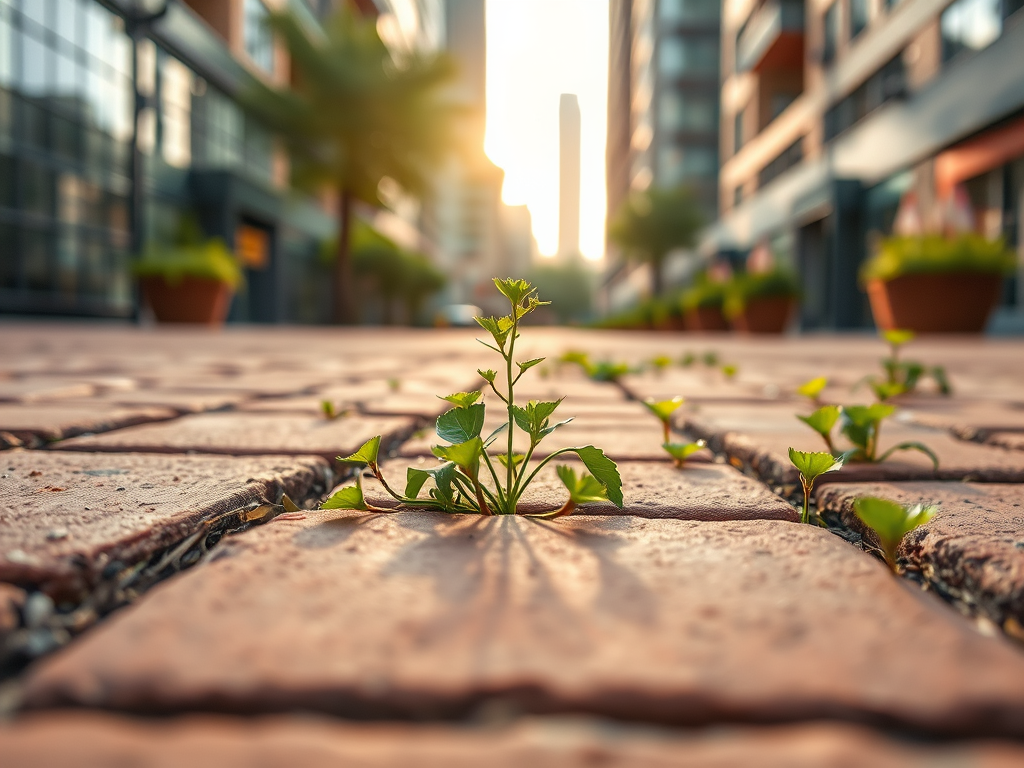
Think about it. We build our cities with concrete and steel, but nature finds a way to crack the pavement with water, seed, and time. We cultivate our fields with fertilizers and pesticides, but nature responds with weeds, pests, and disease. We try to manage ecosystems with scientific precision, yet nature throws us curveballs in the form of floods, droughts, and wildfires.
Human structures require constant inputs of money, energy, and resources to maintain their existence over nature. Culture is what human society asserts upon and over nature. It is not passive. It is not natural. It is imposed upon creation and all its creatures.
Music as Co-Creation with Nature
Consider the act of making music. It takes the raw laws of physics, indifferent to human aesthetics, to be worked upon by metallurgists shaping metal into instruments capable of producing musical notes. Then humans apply breath and skill, turning these instruments into a medium of cultural and aesthetic expression. Human creativity, imagination, and intelligence buckle nature into aesthetic wonder through a co-creative process that is both natural and cultural simultaneously.
A Weed in the City: Lessons from Lockdown

I remember during the COVID lockdown, while working for a doctor and helping the Salvation Army, witnessing nature reclaiming urban spaces. My wife Tania and I walked through the eerily empty city center and saw a small weed pushing its way through the terracotta-colored paving outside a building where Tania used to work.

In that moment, that little weed became a symbol of nature’s opportunism. It seized the chance to assert itself in the absence of human activity, reminding us that nature is always waiting for an opening and will actively undermine human culture through its processes.
A week later, we returned. The weed had flourished—no longer a tiny shoot, but a full-grown plant, defiantly asserting itself against the culturalized city center.
Fragility and Resilience
This seemingly insignificant event revealed the fragility of human structures. The lockdown exposed how much our built environment depends on constant maintenance and human effort. Without that upkeep, nature was quick to reclaim its territory.
But more importantly, the flourishing weed symbolized nature’s capacity and determination. It reminded us that life is resilient and can thrive even under adversity. It was a testament to the tenacity of life and the power of nature to overcome challenges.
In our daily lives, we often forget that we define the spaces allocated to nature, structuring its inclusion within the culture we build over it. The lockdown stripped away that illusion, revealing the emptiness and artificiality of the urban landscape. Left long enough, civilized spaces break down, and nature’s chaotic claim asserts itself against human culture.
Over time, that one plant would open the way for others. Cracks would widen, seeds would take root, and the terracotta paving would gradually transform into something wild and disorganized—a testament to the enduring power of nature’s native resistance and its latent capacity to undo human culture.
The Price of Civilization

This is what “Nature’s Native Resistance” is about: noticing small, everyday examples of nature pushing back against human structures and reflecting on the beauty and resilience of the natural world. Yet, a romanticized view only scratches the surface. Nature is not always beautiful or benevolent. It is a force of immense power, capable of both creation and destruction. To pretend otherwise is to ignore the harsh realities of the natural world—the “blood on tooth and claw” that governs interactions among all living things.
It takes genuine effort, consistent resilience, and real determination to create something beautiful and meaningful in our lives, internally or externally. Without such effort, we revert to the human animal with all its barbaric potential. The atrocities of the last century—the World Wars, the Rape of Nanking, the Gulag, the Holocaust, Hiroshima—serve as stark reminders of how human nature, fueled by ideology, can exploit the capacity for evil. To believe human advancement is “natural” is to ignore the lurking potential for barbarism within us all.
Nature Requires Stewardship
Nature, when constrained and acted upon with purpose, allows coexistence and botanical beauty. Left to its own devices, without human activity, stewardship, or co-creation, nature does not produce a cultivated garden. It produces a forest, a desert, an arena where resources are scarce and the strong dominate the weak. Even the Garden of Eden, as described in Genesis, was not untamed nature but a carefully cultivated sanctuary of beauty and abundance, set apart by God.
The noble savage is as much a delusion as a fully compassionate, cultured society. Neither exists naturally. Ignorance is as common today as in any age, and barbarism persists in every era. One might assume that technology and access to knowledge would deepen human awareness and lived experience—but such potential is not automatically realized.
The answer is simple: it takes effort. Yet human nature seeks passivity in gaining the benefits of culture. Knowledge and virtue must be asserted; they are not natural. As ignorance persists even in our technological age, there is simply more to ignore, and a greater potential for deliberate stupidity.
AI and Human Nature
Current concerns about AI highlight human inefficiency and fear of the unfamiliar. AI can amplify global risks, but it is ultimately a mirror: it only reflects the input of human nature. Without human interaction, programming, and data, AI has no force of its own. If we fear AI, perhaps we should fear the unguarded impulses of humanity itself. Human nature exhibits native resistance to the cultured self.

The COVID-19 pandemic revealed this vividly. Markets were constrained, and human selfishness surfaced—people fought over necessities, tensions rose, and choices about vaccination rippled through families and societies. These behaviors reflect nature’s inherent potential for brutality, even in culturally advanced humans. Nature’s native resistance does not yield a Garden of Eden but an arena where beings compete for resources.
Nature controls through death, sickness, fighting, breeding, and competition. Its resistance is not moral; it is indifferent. Only when humans act as co-creators, willing to look beyond natural self-interest, can beauty, joy, and cultural depth emerge. This is achieved not by chance, but by creativity, intelligence, capacity, and determination.
Human Brilliance and Stewardship
Human brilliance is not equally distributed, no more than artistic genius. Greatness is rare. Yet with humility, deliberate intention, and the invitation for the gifted to contribute, stewardship can become a universal calling.
In Genesis, Eden was a sacred space, set apart by divine presence. Adam, formed from the dust of the earth, was called into this intentional realm, where beauty is both given and cultivated. Eden is not a passive aesthetic; it is the site of presence, vocation, and responsibility. In the same way, we are invited to step out of a passive relationship with the world. Like Adam, we come from the soil but are called to participate in something more—something arising from presence, intention, and care. Beauty is not given by nature alone; it is a gift we steward, an unfolding reality shaped by our engagement.
This call to active responsibility is not a burden imposed from outside; it is a return to our vocation as co-creators, embedded in a world we must honor and shape. Aesthetic delight is inseparable from moral task: it arises from willingness to be present, to care, and to cultivate a world where human flourishing is not left to chance, but shaped by faithful engagement.
Wisdom, Responsibility, and Co-Creation
Wisdom is the deliberate competence to bring about a better possibility, resisting the mundane and attending to the meta-narrative of life. It seeks understanding and benefit within the interconnectedness of all existence. This wisdom recognizes that nature’s well-being and rugged beauty are essential to our own constructed reality.
We are not outside of nature, nor are we driven solely by instinct or emotion. Through understanding, accumulated knowledge, and disciplined application, we can become positive agents within creation—strategic contributors to nature’s native existence, enjoying its wonder while creating cultural depth and aesthetic joy within human experience.
It is said we are made in the image of God. Extending this, the natural world can be seen as a reflection of humanity. If we choose to act wisely and protect nature in its own right, we can also cultivate societies rich in culture and conducive to human flourishing—but only through deliberate, willful, collective human agency.




Leave a Reply