Disclaimer: Before you dive into this reflection, please understand that my observations are rooted in my experiences within the Christian faith. This piece is not a critique of any specific institution or individual, but rather a reflection on the human condition as it manifests within Christian traditions. In my journey across various churches, I’ve seen the same patterns of human frailty and imperfection. This is not about blaming others, but about acknowledging our shared humanity and the universal nature of our flaws.

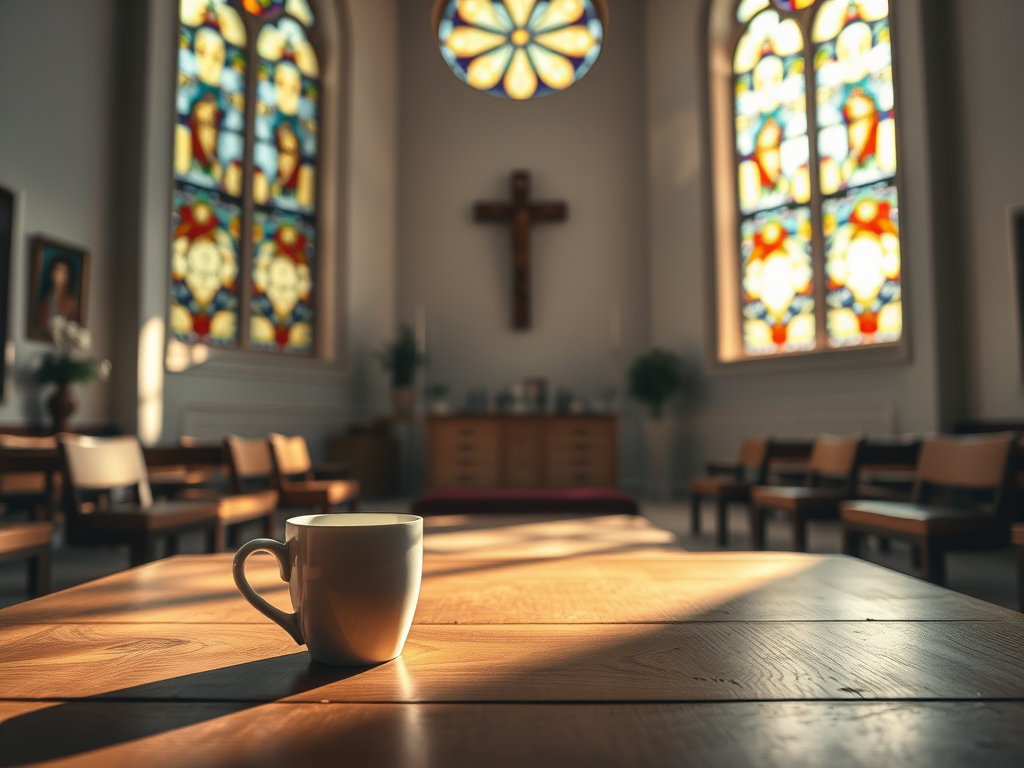
A day after surgery, still riding the dull, floating edge of decent painkillers, I found myself wandering toward the hospital chapel. I was craving quiet—something deeper than the clipped voices, the antiseptic air, and the low hum of recovery. Coffee in hand, I stepped inside, hoping for a moment of stillness.
I finished the coffee quickly enough, but then found myself awkwardly holding the empty cup. I placed it on a nearby table, hoping it wouldn’t look too out of place. As I turned back, I noticed a poster on the wall: a collage of smiling faces—the chaplains and support staff of the hospital. And then the question arrived, uninvited but unmistakable: Who here would I trust to understand the complexity of my life?
The answer came immediately. No one.
A quiet but profound sense of failure washed over me. After everything I have lived through, why would I trust any of these people with the deeper truth of who I am?
I paced further into the chapel. Sitting was out of the question. Only days earlier, a rather large abscess had been removed from my buttock, and the thought of settling onto one of those hard wooden chairs bordered on masochism. I moved slowly, taking in the artwork, the cross, the familiar religious symbols. The space could have been sacred. I could sense it. But if connection was going to happen here, it wouldn’t come through any human intermediary.
It would have to come directly.
That realisation sharpened the question of trust. Why would I place my spiritual life in the hands of others when the most honest moments of faith I have known have always been unmediated? And then another memory surfaced—one that has never quite loosened its grip. After my conviction, not a single church representative reached out to me. Not one minister. Not one pastoral visit. In prison, that absence spoke louder than any sermon ever could. It forced a recognition I could no longer avoid: those who claim the cloth are still only fallible human beings.
This is not a demand for perfection. Human failure is universal, and ministry is no exception. My criticism lies elsewhere—in the distance I have so often experienced between ministers and their own humanity. Too often I have encountered people operating from role rather than relationship, from performance rather than presence. Looking back over my life as a Christian—and especially as an autistic person who has always struggled to fit—I see a painful pattern. I have spent far more time trying to understand them than I have ever felt understood by them. More than once, I have found myself on the receiving end of their criticism.
At sixty‑one years of age, I am simply finished with that economy of effort.
An example still stings. Years ago, while training at Salvation Army College, we were required to participate in one of those group‑sharing exercises that were popular at the time. We were asked to speak honestly about another cadet. One woman looked at me and said, “I love you, Malcolm, but I really don’t like who you are as a person.”
She explained that, as a Christian, she loved me in the Lord, but she could not cope with who I actually was—my oddness, my inability to fit the mould, the discomfort my presence seemed to evoke in her. She could love the abstraction. She could not accept the reality.
That moment has never left me. Its sharpness and disconnect captures something deeply broken. If Christianity never moves beyond preformative connection—if it fails to reach the soul and reshape how we inhabit the presence of others—then it is thin, no matter how orthodox its language may be. Why would people trust a representative of faith when they are truly representing their own discomfort and need for conformity – this too is the human condition.
The contrast came years later, in prison.
I was wandering the yard when a large Maori man seated on a bench called out, “Hey bud—come here.” I realised he meant me, this big Pakeha man that was thin in comparison, and so I walked over. “Sit down,” he said. “Let’s chat.” We did. We joked. We laughed. At one point I playfully called him cheeky and nudged him with my arm. He nudged me back—harder than expected—and I ended up being shoved along the bench. We both erupted in laughter.
Later, another inmate told me who he was. Apparently, he was someone most people avoided and were fearful of. Influential. Intimidating. Dangerous, even. I had no idea. I had simply treated him as another human being. And he, in turn, had responded with warmth and humour that continued beyond that moment.
That was real connection—unguarded, unperformed, human. And it struck me how rarely I had experienced that same quality of encounter within the Christian church, where interactions often feel managed, sanitised, and constrained by image.
A faith that arises from the soul—a faith that is true to the self—does not need to police the humanity of others. It can invite without judgement. There was a time when I actively sought out fellow Christians, almost hunting for those who shared my beliefs. I still value those conversations. But I have discovered a deeper joy in speaking with people simply as people—talking about life, existence, suffering, hope.
In those spaces, faith can be shared honestly. So can doubt. So can difference.
Only insecure belief needs constant validation. A strong faith—one grounded in being rather than performance—can sit comfortably with the stranger, with the outsider, with precisely the people Jesus chose to eat with. Because beneath our roles and failures, we are all struggling creatures, trying to make sense of lives that routinely exceed our understanding. That is not a defect. It is the human condition.
Standing there in the chapel, I felt something I had not known in my younger years: freedom. For decades I had sought acceptance—often unconsciously—from religious authorities. The desire for validation from someone in clerical clothing had shaped more of my faith than I cared to admit. Given autism, given my long history of not fitting, that longing was understandable.
But prison, suffering, and disappointment have given me an unexpected gift. I now see that authentic faith is inseparable from existential faith—the faith that arises from one’s very being. It does not require endorsement. It does not need permission to exist.
It is strong enough to stand alone.
Unfortunately I am now one of those who struggle with genuine connection, too tired and beaten down; I prefer my isolation, and my freedom to not belong to institutions and groups – and yet, God remains and faith is stronger. I am freer to be who I am – and I don’t seek or need people to ‘want me’ in those roles anymore.
Yes, I too have become the thing I am criticism, but I can be honest about that. So, as I finished my Chapel moment, heading back to the ward, tired and ready for more sleep I felt at peace before God and myself – I embrace my humanity because what more could there be for me before God’s grace.



Leave a Reply