

That’s a really insightful question! It gets to the heart of something really important. But I think to truly understand it, we need to shift our focus a bit. Instead of starting with how we’re saved, let’s start with who saves us, and why that matters so much.
Why start here? Because if we start in the wrong place — focusing solely on how we’re saved — we can easily reduce Christ down to a means to an end, a cosmic vending machine dispensing blessings. We diminish His agency, His inherent worth, and His rightful place as King of Kings. Instead of lifting Him up, we box Him in, limiting Him to our own needs and desires.
So, instead of starting with Jesus as saviour — which is certainly important — I suggest we start with something even more fundamental: the actual agency of who Jesus Christ is. We need to recognise Him as Lord of Lords, King of Kings, the incarnated One, and the Son of Man. These aren’t just titles; they reveal the very essence of His being. It’s from this understanding of His divine authority, His sovereign rule, His human embodiment, and His unique relationship with humanity that we can truly grasp the meaning of faith and trust in Him for salvation. Because it’s at this level — understanding who He is — that the secondary question about church membership finds its proper context.
Because Jesus is Lord of Lords, King of Kings, the incarnated One, and the Son of Man, He possesses the inherent authority to invite us into Himself. This is where Paul’s profound theology of being ‘in Christ’ becomes so vital. We are not merely in the church; we are in Christ. And from that union with Him, everything else flows. This also connects with Jesus’s words to the woman at the well: ‘God is spirit, and his worshippers must worship in the Spirit and in truth.’ (John 4:24) True worship and true belonging transcend physical location, cultural expression, and individual limitations. Instead, we are invited to participate in something far greater — a spiritual reality rooted in the very being of God, expressed through the person of Jesus Christ.
Because we are invited into Christ and indwelt by the Spirit, we become part of His body. As Paul so eloquently taught, we are joined together with Him by the Spirit, and through Him, we are connected to the Father. This means that the Father, Son, and Holy Spirit are in union with each person who accepts Jesus as Lord, King, the incarnated One, and the Son of Man. It is in this shared union that we are joined together in a common unity, a community of people from diverse times, locations, and cultures who share this same understanding of Jesus Christ.
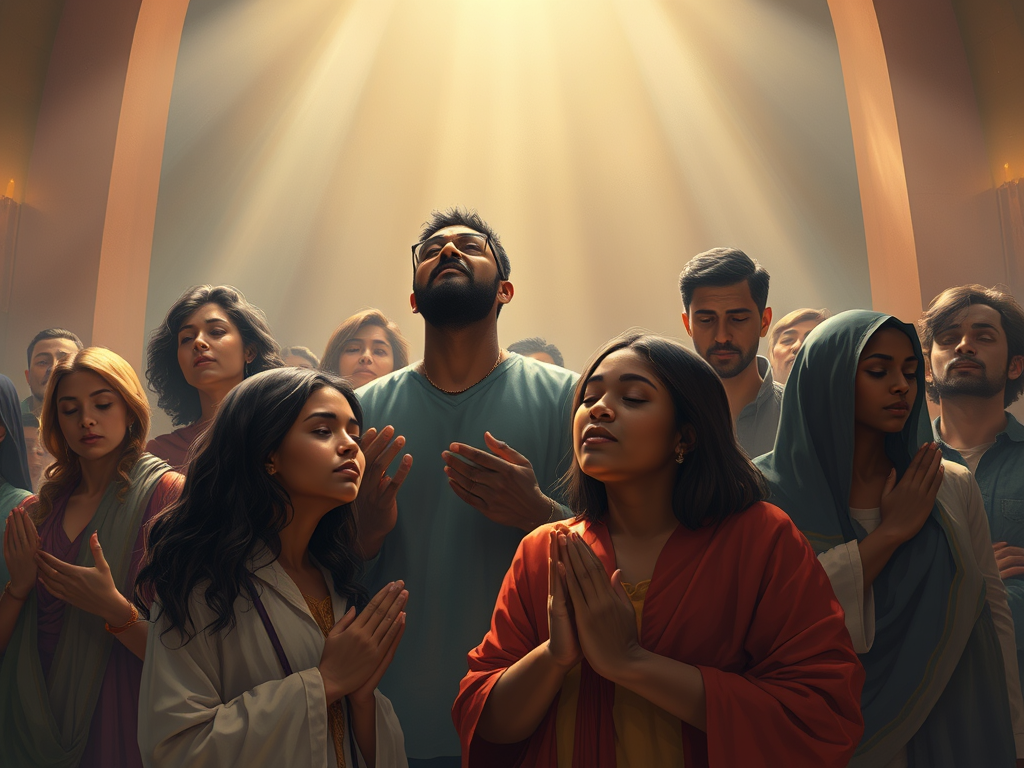
This community, bound together by this shared faith and allegiance to His Lordship, is what we call the body of Christ — the church. But the body of Christ, as Jesus Himself taught, is also the Kingdom of God. And every kingdom has its essential elements: a King, a land, a law, a culture, and citizens. Therefore, we must be careful not to equate the church with any particular denomination, which is often a watered-down, human-oriented cultural expression. Instead, we must understand the church as Jesus taught it: a community of citizens living under the reign of Jesus Christ as Lord and King. If we are in Him, we belong to this Kingdom and this church, but we must never confuse the church with any single denomination. While a denomination may contain the church, the church transcends any denominational boundaries.
So, if you’re asking what it means to have faith and trust in Jesus for salvation beyond the idea of a denomination, it’s this: You belong to the church because you are part of Christ. If you hold to these truths about Jesus — that He is Lord, King, the incarnated One, and the Son of Man — then you belong to Christ. He is your King, you are part of His Kingdom, and therefore you are part of His church, His ekklesia, the called-out ones. Whether or not you are affiliated with a particular denomination, you are His church. Singly and collectively, we are the church. And so, we need to see the church as a natural expression of belonging to the Kingdom and participating in the culture of that Kingdom.
Belonging to a denomination, local church, or even a home fellowship is a subset of being part of the Kingdom — the global unity of people who celebrate the Lordship and agency of Jesus Christ. And because God Himself is a union — Father, Son, and Holy Spirit — connecting with fellow citizens of that Kingdom, in whatever form that takes, for encouragement and mutual support is an essential part of belonging. It’s in the very nature of God to be in community, and therefore it ought to be in the nature of His citizens as well.




Leave a Reply